
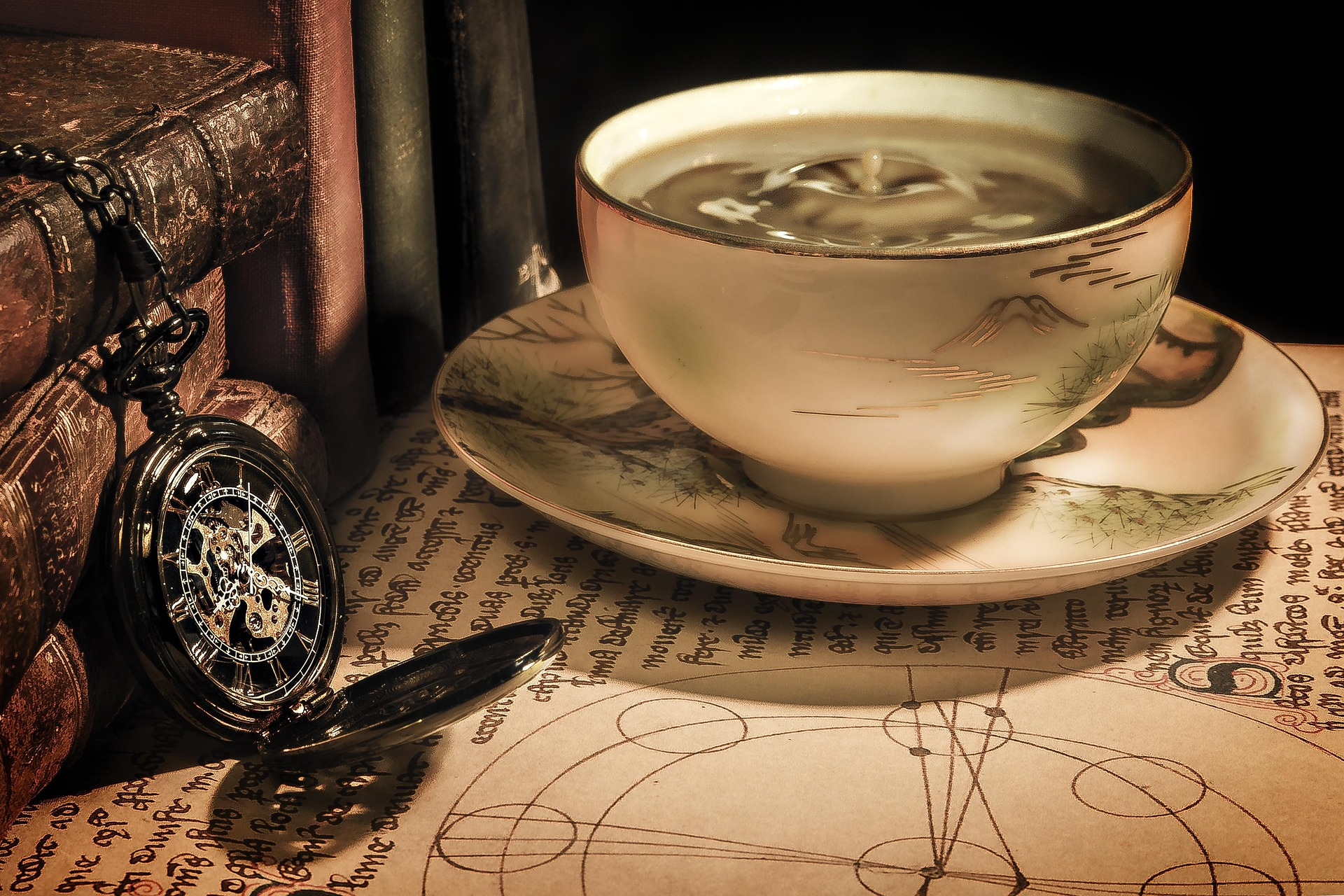
“Tea Duel: a chance for civilized men and women to gather in high fashion, enjoy each others company while supping on small treats…”
-Gail Carriger
We shall refine the matter further, drawing closer to the canonical proceedings as set forth by the Honourable Association of Tea Duellists (third edition, 1899, as compiled under the benevolent gaze of the signatories to the Hague Convention of that year, or so the legend maintains). And since you mention Gail Carriger, we might permit a whisper of her particular flavour: that crisp, parasol-wielding precision, the faint scent of mechanised propriety, and the understanding that even in the midst of polite combat, one must never quite lose one’s composure—or one’s gloves.
Tea duelling remains, at root, a contest of nerve, timing, and minimal mess, conducted with the utmost decorum. The full Articles are a lengthy document of mock-Victorian gravitas, but the essential rules, as practised in most civilised gatherings, run thus:
Preparation and Apparatus
- The Beverage: Tea, and tea alone. No coffee, no chocolate, no herbal infusions masquerading as the real article. It must be properly hot—near boiling when poured, ideally around 65–70°C at the moment of dunking—to ensure the biscuit’s structural crisis is both prompt and predictable. Milk and one sugar are traditional; variations are tolerated provided both duelists receive identical brews.
- The Biscuit: A malted milk biscuit is the gold standard in the old country (sturdy yet vulnerable after immersion); digestive biscuits follow closely. In transatlantic circles, the Pepperidge Farm Chessmen shortbread often stands in, prized for its uniform shape and predictable crumble. All biscuits must be identical within a given duel.
- The Vessels: Standard teacups or mugs, matching in size and filled to a consistent level (usually two-thirds full). No saucers are strictly required, though they add a certain elegance—and a safety net for drips.
- Officials: A registered Tiffin Master (or Mistress) presides, acting as both Pot Steward (pouring the tea with impartiality) and referee. Seconds may attend each duellist for moral support, though they must remain silent unless called upon.
The Ceremony
- The duellists approach the table, shake hands firmly, and bow with appropriate gravity.
- They are seated opposite one another.
- The Tiffin Master pours the tea, ensuring equity in temperature and volume.
- Each duellist selects (or is presented with) their biscuit, which is held between thumb and forefinger only—no other digits permitted, lest one gain unfair purchase. The biscuit points downward toward the cup.
- At the command “Dunk!”, both submerge at least three-quarters of the biscuit into the tea for a precise count of five seconds (the Tiffin Master counts aloud: “One… two… three… four… five… withdraw!”).
- The biscuit is lifted clear. No shaking, no tapping against the rim, no remedial dunking.
- The duellists now hold their sodden charge aloft. The contest proper begins: one must consume the biscuit in a single, clean bite (the celebrated “nom”) after one’s opponent has done so, yet before one’s own biscuit disintegrates entirely—dropping into the cup, onto the table, the clothing, or (most disgraceful) the floor.
- The last duellist to achieve a clean nom, without crumbs or significant spillage, is declared the victor. Should both succeed without fault, the one who waited longest claims the laurels. Should both fail simultaneously, it is a draw—or, in some interpretations, a shared honour.
Fouls and Disqualifications (most rigorously enforced):
- Dunking for fewer or more than five seconds.
- Submerging less than three-quarters of the biscuit.
- Using more than two fingers, or gripping in any unorthodox fashion.
- Splashing tea beyond the cup.
- Allowing biscuit fragments to fall before the nom (a single small crumb may be overlooked by a lenient Tiffin Master; a shower is fatal).
- Employing spoon, napkin, or any other implement in extremis.
- Premature consumption before the opponent has nommed (considered poor form, though not always disqualifying).
- Excessive hesitation leading to the biscuit’s collapse without attempt (forfeiture).
The audience, ever an essential part of the proceeding, is invited to cry “Foul!” or “Hold!” for infractions, though the Tiffin Master’s word is final.
As to the enjoyment? It is the quiet thrill of brinkmanship: the slow, inexorable softening of starch under hot liquid, the suspended breath as one waits for the precise instant when the biscuit will bear one final, defiant bite. Miss Carriger would no doubt approve the sartorial aspect—corsets, waistcoats, and gloves lending an air of unflappable dignity to what is, after all, a contest of imminent catastrophe. One duels not with sabre or pistol, but with poise; victory comes not from force, but from the exquisite calibration of delay. It is, in short, a most British absurdity: restrained, ritualised, and perilously close to farce, yet conducted with perfect seriousness.
Leave a Reply